Download Brochure for Bachelor of Global Fashion Design
Program Description
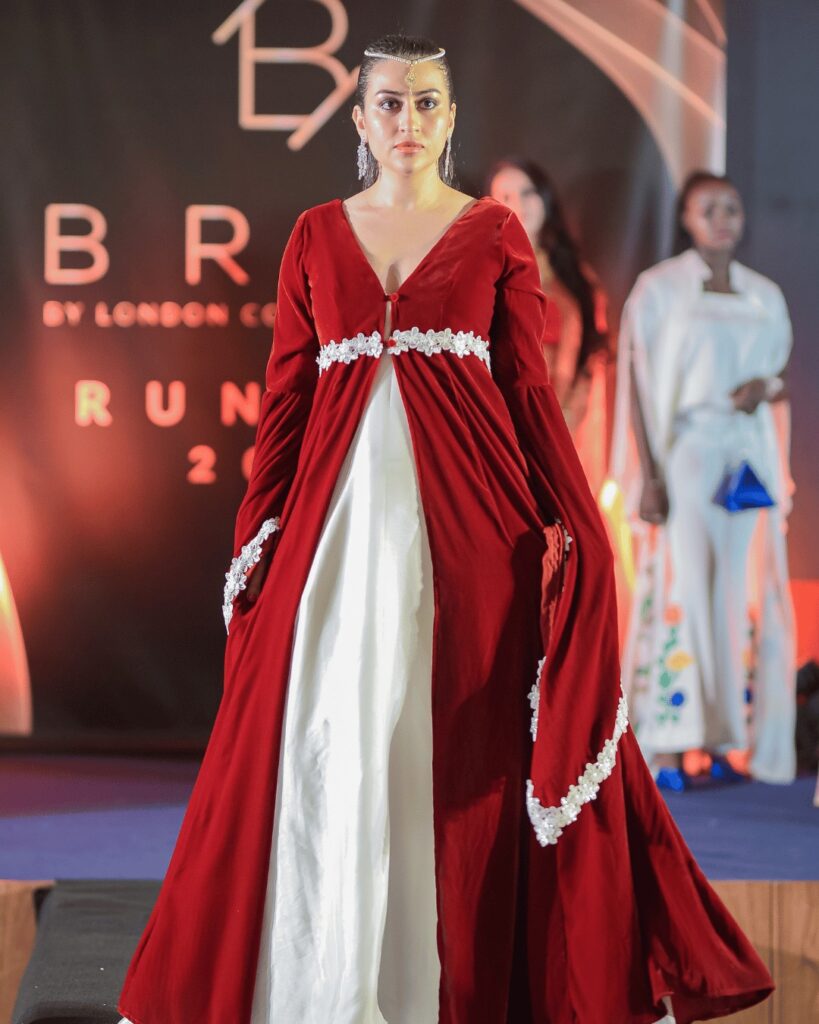
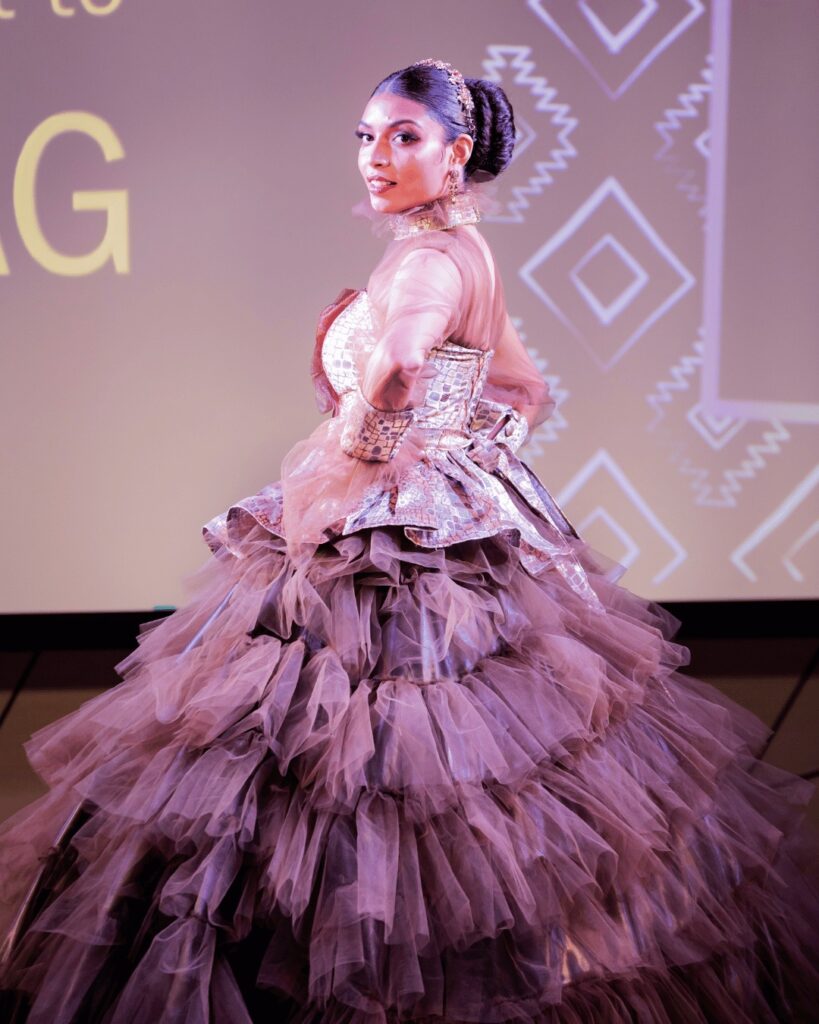
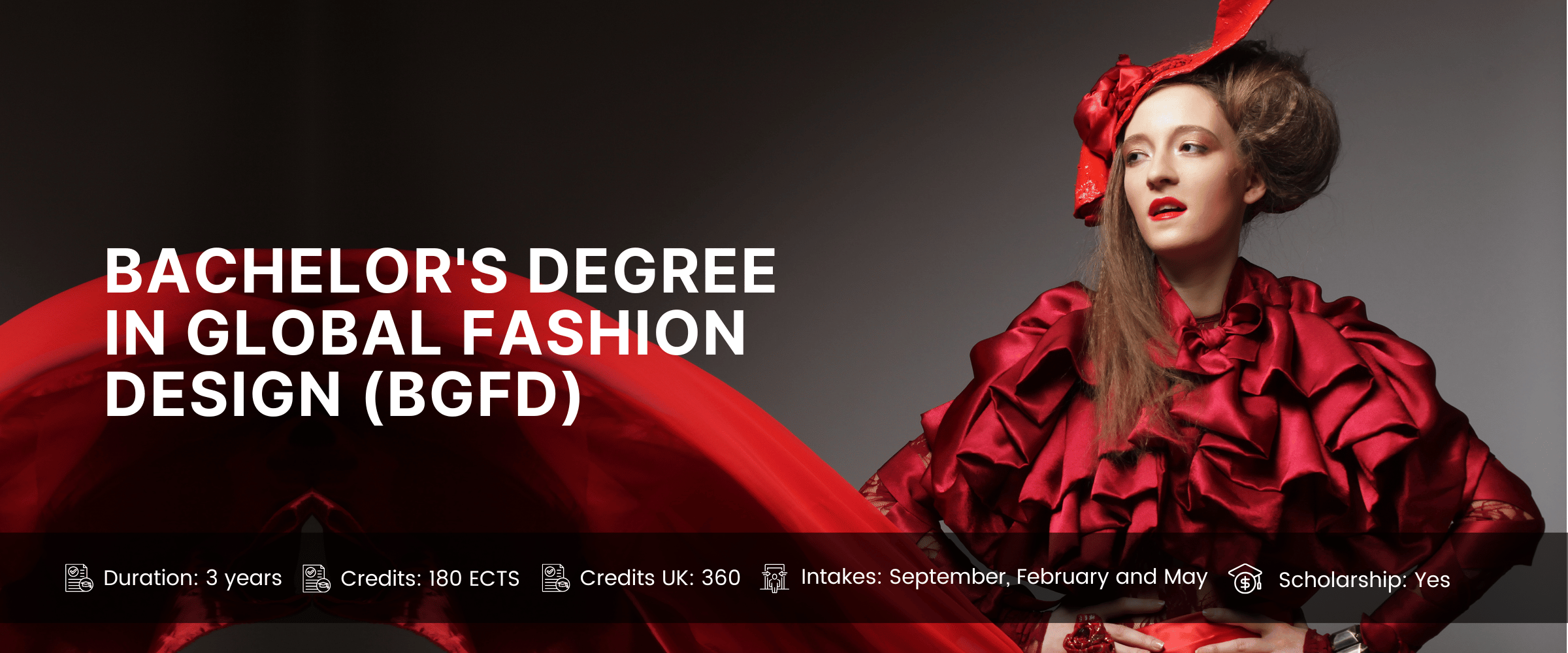
The Bachelor’s Degree in Global Fashion Design is a 180 ECTS, European-accredited program that provides participants with the techniques to design and create wearable fashion collections while responding to the changing needs of the international fashion and luxury industries. Fashion designers are the inspiration for creative ideas and new trends, not only in clothing but also in fabric development. They create collections based on an informed analysis of materials and fabrics in connection with art, design, creativity, and fashion. Starting with techniques typical of fashion design and illustration, this course addresses the analysis of fabrics and clothing manufacturing, as well as the history of dress, concluding with a final portfolio of work, all embracing the modern age technologies and with an ethical approach to fashion
Course Flow for the 3-year Bachelor’s Degree in Global Fashion Design
Year 1 – 400 level units
Year 2 – 500 level units
Year 3 – 600 level units
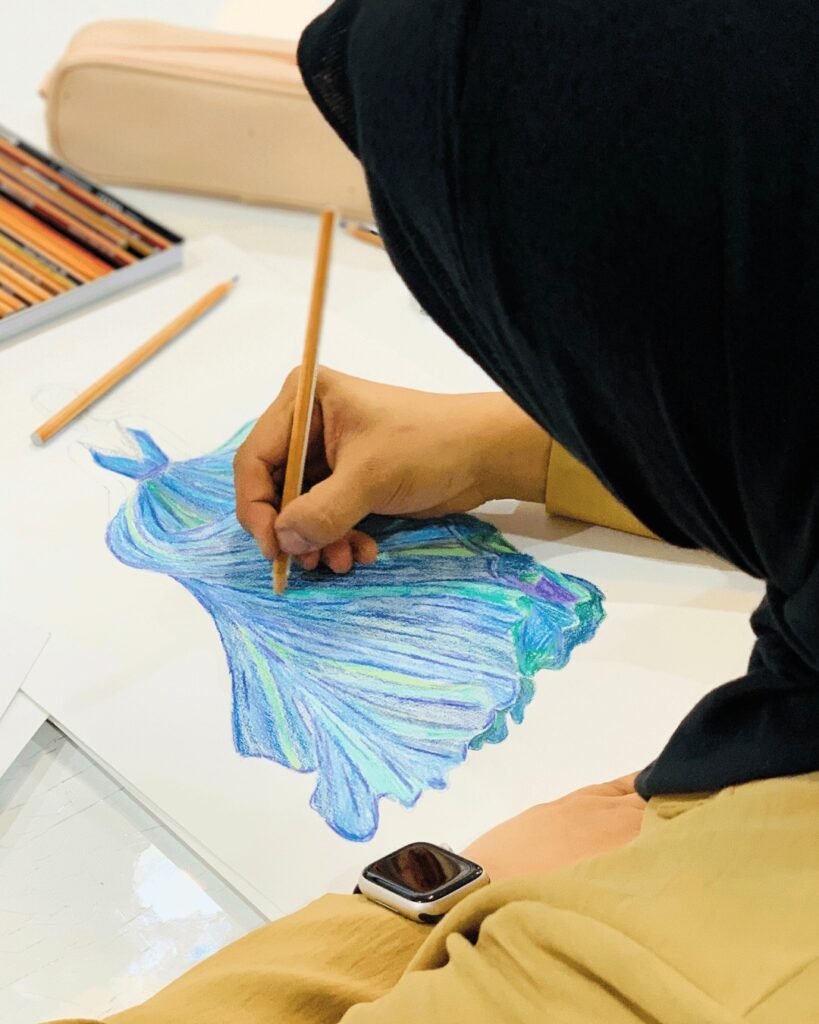
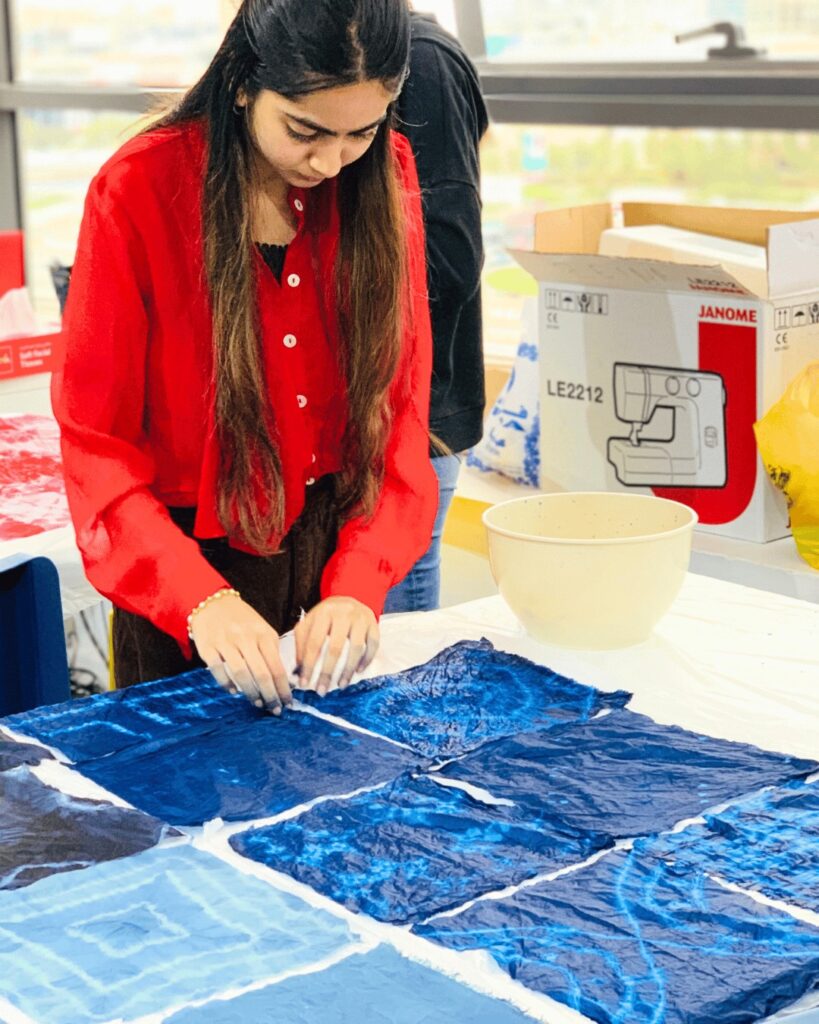
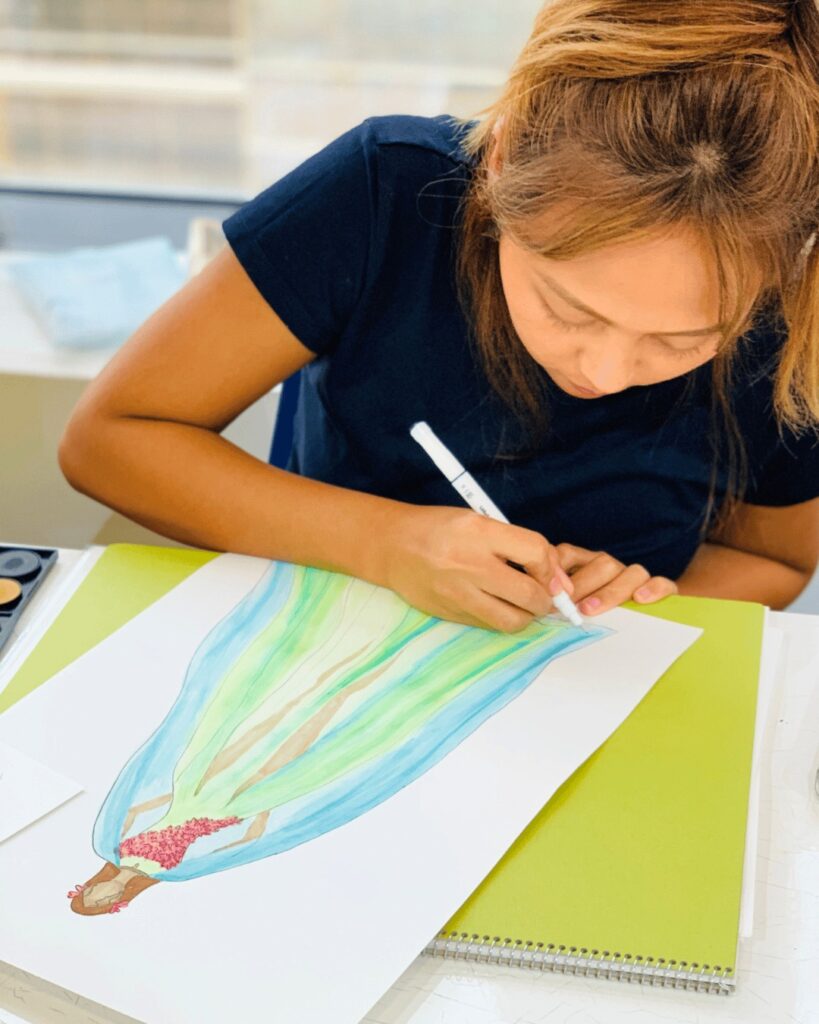
| This module will provide a clear outline of the various creative concepts in Basic Fashion Illustration & Textiles. The students will learn about fashion croquis and various fashion illustration techniques using appropriate colouring media. Additionally, students will gain insights into the properties of fabrics, their weights, and their proper uses. This module will provide in-depth coverage of various fashion and fabric ornamentation techniques, guiding students throughout the entire course program. The module will be treated with an ethical method of study and practice (such as employing organic dyes for printing or proper fabric consumption techniques), wherein students will understand the various techniques needed to complete their assignments and apply them in practical settings. |
The process of garment making, following from the pattern, relies on skills in the understanding of pattern, use of textile and skill in sewing and assembly. The main purpose of this unit is to provide students with opportunities to develop skills in the production of contemporary fashion and innovative pattern cutting. Students will carry out fabric sourcing and use various technologies in the development of structured and unstructured clothing. They will learn the skills of design research, design interpretation and three-dimensional realisation, presentation, fit alteration, pattern drafting and adaptation, construction, and manufacture. They will also carry out fabric sourcing and develop an awareness of sustainability and ethical issues.
| This unit will introduce students to the fundamental technologies that underpin the textile industry and provide insight into both traditional manufacturing processes and new developments within the industry. On successful completion of this unit students will gain a broad understanding of a wide range of textile technologies, including the manufacture of fibers, yarns and fabrics. Each part of the textile industry, from fibers to finishing, is critical to the final product. By studying this unit students will understand how textile technologies interact to form part of a larger, interdependent system. The unit will also introduce students to current issues within the industry, including the impact of new technologies and environmental concerns. |
This unit aims to provide students with opportunities to develop their understanding and knowledge of CAD software applications used in the creative industries, as well as the practical skills to utilise this technology within their own creative work. On successful completion of this unit students will be able to understand the current and prospective uses of CAD technology within creative industries, and be able to produce CAD drawings, objects, 3D environments and visualisations.
This unit aims to support students in gaining further understanding of the fashion design process and developing their personal approach. By producing a portfolio of illustrations, synthesizing research and design into working drawings or technical flats, students will follow the full cycle of fashion illustration and recreate the same using various garment construction techniques for men’s, women’s, and children wear. Students will apply skills in researching and the design process while enhancing knowledge and skills in pattern cutting and garment construction in relation to an upcoming and emerging consumer market.
Sustainable Fashion aims to challenge conventional thinking in fashion by integrating holistic, sustainable design and business solutions throughout. The coursework requires critical thinking and problem-solving, and is designed to create systemic change that helps combat the fashion industry’s unsustainable footprint. Projects develop and deepen your understanding of sustainability as it relates to the fashion, textile and related industries. The course gives participants the opportunity to develop solutions and plot a new future for themselves and the fashion industry by developing new systems that challenge existing practices. Students will choose their areas of focus, ensuring their outputs have real-world applications that contribute to society, culture, and ecology.
A fashion collection is a response to a range of creative and economic factors. This unit aims to provide students with the skills and knowledge required to develop their first cohesive fashion collection from the starting point of initial client brief through to final presentation of design work. Topics included in this unit are research for design, trend forecasting, creating concept boards, devising customer profiles, ideas generation, design development, and traditional and contemporary media Illustration techniques. This unit also provides students with the opportunity to explore the selection and specification of materials as used in their specific subject area. In addition, students will consider the broader issues of material sourcing, manufacturing, innovation, smart materials, sustainability, and ethics in relation to materials and processes.
Draping is the art of creating three-dimensional models of outfits that can be transformed into a finished garment. In this unit, students will be introduced to the fundamentals of draping in order to realize their own unique designs in three-dimensional form. Students will have the opportunity to develop their own creative project, modelling their own design based on skills and techniques learnt. With a strong emphasis on research, you will produce a file of inspirational images and material to support your own creative ideas. Students will be encouraged to photograph each stage of the draping process to help them evaluate their progress and to create their own personal resource to refer to when undertaking related projects in the future.
Creative entrepreneurship is the process of utilising creative thinking and practice to establish and grow a business, leveraging creative opportunities. As with many activities within the creative industries, creative entrepreneurship demands a diverse range of skills. In addition to understanding one’s own creative practice, there is a need to develop skills and knowledge in business practices, finances, and the ability to work collaboratively. This unit provides a framework in which students can explore their creative entrepreneurial skills by developing ideas and exploring their viability in a business context. Students will explore why branding is important, how successful companies have established their identity and how this relates to their core values. The unit is structured to give students a clear understanding of brand and identity, and its impact in a commercial marketplace. Students will be introduced to historical and contemporary movements and examine the ways in which the time, place and conditions of production influence and shape visual merchandising.
Accessories are just as much a part of fashion history as specific types of apparel. This unit aims to provide students with the opportunity to develop an awareness of accessory design in the fashion industry and beyond. A strong emphasis will be placed on the use of research, conceptual, creative, and technical skills, along with the development of essential skills, such as pattern-cutting and visualisation. Students will investigate and propose various ideas for fabric decoration to add an element of interest. Students will learn a wide variety of embroidery stitches, incorporating the use of the most common materials such as mirrors, beads, sequins, threads, wires, buttons, etc. The students will also be introduced to various other surface ornamentation techniques such as dyeing, printing, and new designs for fashion-forward, luxury and high-street markets.
Design Project management covers the management of a project from conception, through design and construction stages, into end-user and end-of-life management. This unit aims to explore theories and practices related to project management, the role of the project manager, and how to manage stakeholders throughout the project process. Topics covered in this unit include Project management as a discipline and its suitability for a range of art and design industry activities, project stakeholder types and their management, project manager roles and responsibilities, and project management plans. Students will also understand the methods of designing presentations and add value to their professional portfolio.
Trend forecasting is an activity that underpins a range of different sectors within the creative industries. The aim of this unit is to introduce the process of trend forecasting and understanding how to use forecasting information to support design decisions. Students will explore how to use forecasting methods, who the leaders in the field are, and areas of application for trend forecasting. Topics included in this unit are: forecasting methodology, the zeitgeist, trend cycles and patterns, leading trend forecasting agencies, pantone color referencing, trend package development and presentation and trend communication. This unit will introduce the principles of fashion styling and the role of the stylist in relation to a team of people creating fashion images. The unit will focus on fashion imagery of the last 50 years and the work of fashion editors and stylists, as well as influencers, photographers and magazines, and the culture of the fashion industry
Entry Requirements
The ideal learner to apply for a Bachelor’s Degree in Global Fashion Design would be
-
- Holding a high school certificate or equivalent such as matriculation certificate
- 18 years of age or above
- English Language Proficiency: Candidates who are non-native speakers of English language or have not studied their high school or undergraduate in English must undertake the IELTS at 6.0 or above The English language proficiency requirement may be waived if the student is a native speaker of English and/or they have completed their secondary education in a country where English is the official language or English was the first language of instruction where they graduated.
- Digitally literate with fundamental skills in computing including but not limited to word processing, spreadsheets, presentation software, and the internet that would be useful for their studies.
- Mature learners may apply for the program should they have at least 3 years of work experience and above.
- Transfer students may apply for RPL with their prior accredited qualifications at Level 5. Credits can be awarded to level 5 only.
Note: Each application will be assessed on their merit.
Assessment
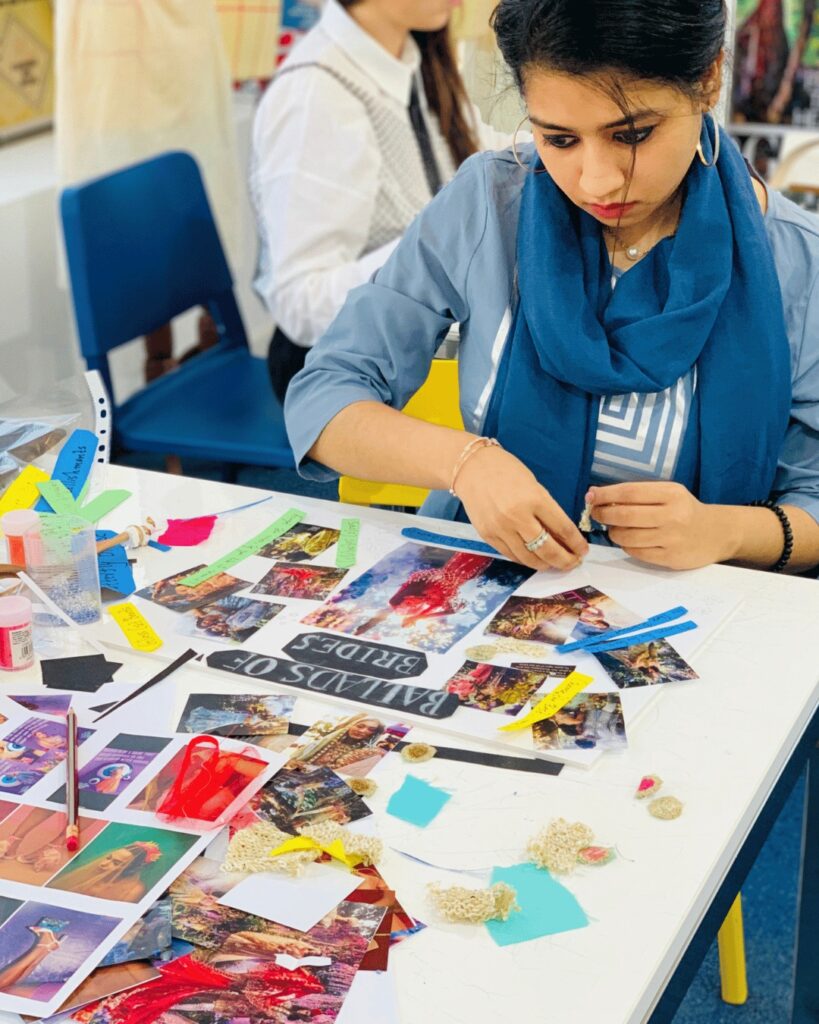
Assessment will be through a range of different types of coursework. Across the modules of this program, the range of coursework assessments will generally include but are not limited to Essays, Case studies, Individual reflective learning logs, Portfolios, Group presentations, Critical reflections, group/teamwork, Posters, Mood Boards, Drawing sheets, Presentations, Project proposal, Project reports.