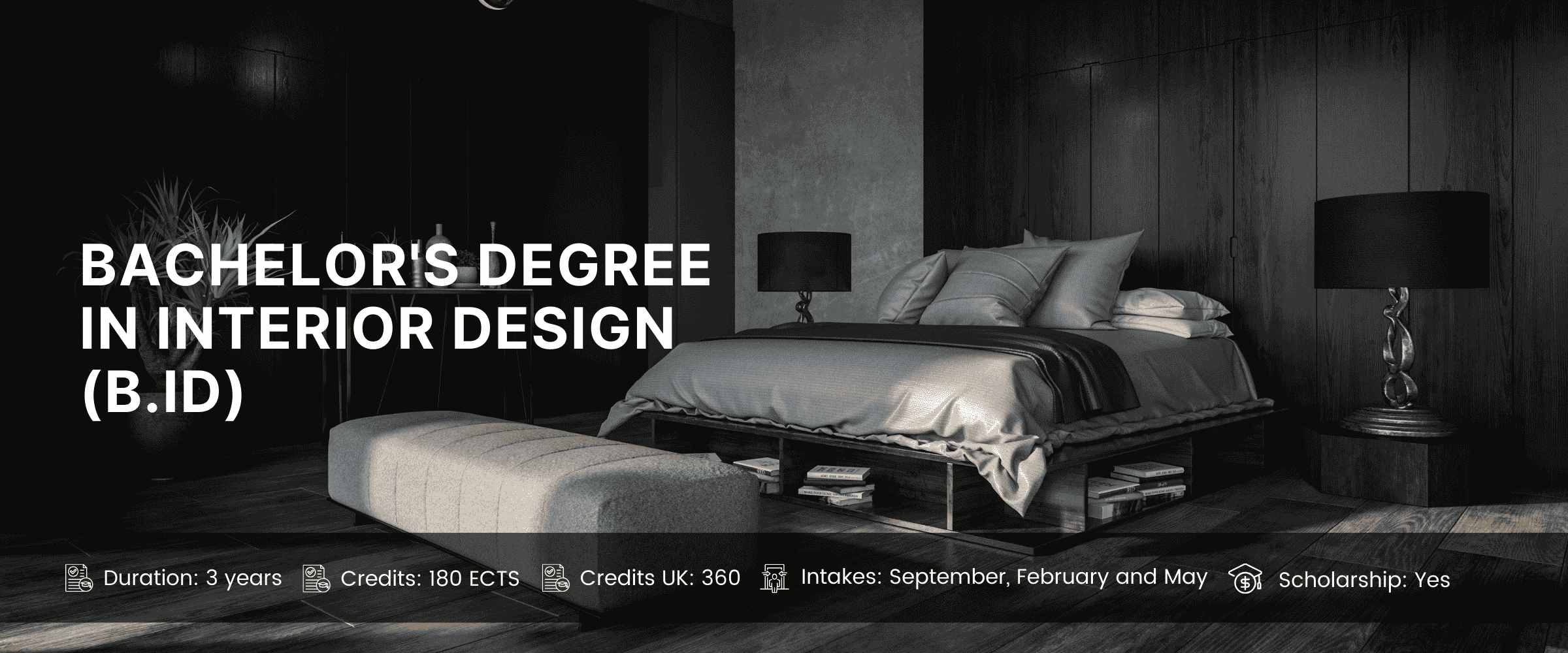
Brochure for Bachelor’s Degree in Interior Design
Program Description
The Bachelor’s Degree in Interior Design (BID) is an accredited Level 6 Degree program – 180 ECTS spread over 3 years of Study. The program equips learners with the skills to design and produce functional and comfortable spaces. This includes understanding client requirements and integrating them into the project, as well as considering industry standards and market conditions to create functional and usable spaces. Interior designers are creative leaders who uplift society with their analytical thinking and problem-solving abilities, not just in choosing furniture but also in creating better experiences in any place. When designing a space, designers consider the intended user and the area’s functioning while selecting the appropriate materials and styles to complement each other. This program explains the importance of designers in society by starting with fundamental design principles and progressing through the evolution of styles and design, as well as space planning, culminating in a creative portfolio that showcases their work.
Course Flow for 3 Year Bachelors Degree in Interior Design (BID)
This module facilitates the cultivation of a foundational comprehension of design. It also explores the use of drawing as a tool for communicating design concepts. Furthermore, this module aids in investigating the significance of decoration and planting in addressing a design directive. This module offers an introduction to the fundamental principles of 3-dimensional design, focusing on visual research and design development as essential prerequisites for creation. It encourages the consideration of decoration, ambience, and layout planning, as well as fosters an understanding of engaging in discussions related to a design brief.
The objective of this module is to facilitate learners in acquiring the necessary skills in both manual and digital drawing techniques. Additionally, it aims to investigate the interconnection of orthographic methods and how they can be utilized in design delivery. The module also emphasizes the exploration of strategies like mind mapping, conceptualization, and design development to initiate the design process. This aids in gaining insight into the practical assessment of a space for design advancement and in comprehending the process of briefing.
This module is designed to familiarise learners with a historical and contextual understanding of their subject area. It also serves to introduce learners to critical thinking, critical analysis, and structured inquiry processes. Additionally, the module aims to inspire learners to cultivate curiosity and explore their interests within the evolution of artistic practices in their discipline.
This module is designed to foster curiosity, enhance critical thinking skills, and introduce research methodologies that can be applied in studio practice. By doing so, it provides an opportunity to not only analyse one’s work and the work of others, but also to contextualise studio practice within the context of emerging themes in art and design. Additionally, this module aims to strengthen research direction, the ability to engage in debates, and the capacity to articulate ideas through various forms of expression. The aim is to enhance research and observational abilities to enhance the quality of ideas and conceptual designs. This involves delving into the creative process of developing ideas and concepts specifically in the realm of product design. Additionally, the goal is to strengthen design methodology and skills by employing creative and imaginative problem-solving techniques. Furthermore, the course aims to explore and appreciate the design of interactions, experiences, and processes, all while considering the needs of consumers. Lastly, the module will focus on developing skills in concept sketching, diagrams, layout, and ultimately creating professionally presented design boards.
This module aims to delve into surface finishes and their diverse applications in interior design. Learners will analyse and assess the properties of materials, determining their suitability for use on walls, floors, and soft furnishings. This examination will involve an understanding of how these materials contribute to the functionality and visual appeal of an interior space. Additionally, key topics such as cost, regulations, environmental considerations, and technological advancements will be covered.
The primary objective of this module is to enhance skills in various 2D drawing methods and to generate effective designs. Moreover, the course aims to broaden technical design skills and practical understanding within the specific field of study. The primary objective is to demonstrate a thorough comprehension of the importance and function of 2D artwork in shaping interior environments. Furthermore, the course endeavours to cultivate an understanding of the limitations set by real-time tools and the processes utilised in the professional design sector.
The primary objective of this unit is to provide a thorough structure for organising the spatial layout of room designs. Within this unit module, learners will develop the necessary expertise to produce initial sketches and transform them into completed layouts, all while meeting the client’s needs. Moreover, this unit aims to empower learners to excel in planning various spaces by thoughtfully assessing their intended purposes. This approach will equip learners with a comprehensive understanding of the scale, function, and design options involved in creating spaces of varying sizes.
This module focuses on enhancing the understanding of the wide range of furniture and accessories available to interior designers, encompassing various styles and market levels. By exploring the history of furniture and accessories, learners will gain insight into the evolution of design within its historical context, enabling them to identify significant design movements. Additionally, learners will explore various materials and manufacturing techniques, which will help them develop design schemes and make informed choices when selecting furniture and accessory products. They will also learn how to modify schemes by evaluating the impact of different accessories, and will be encouraged to expand their knowledge of suppliers. Ultimately, the topics covered in this module will equip learners with the skills to interpret client requirements and effectively choose appropriate furniture and accessories in response to a given design brief.
The module emphasizes retail design strategies, aiming to assist learners in understanding the multitude of factors that must be taken into account during a project. It also delves into the various planning considerations that play a crucial role in providing a comprehensive understanding of circulation and layout in retail projects. This module aims to delve into a specific field of art and design that captures your interest. It aims to provide you with fundamental knowledge and practical skills in one or two specialised areas or encourage exploration of an interdisciplinary practice. Additionally, it seeks to examine how the utilisation of materials, processes, strategies, and practices can enhance and support the realisation of creative objectives. Ultimately, the unit aims to enable you to bring your creative intentions to fruition. The primary emphasis of this unit lies in the various stages of design, encompassing concept development, planning, and actual design implementation. It strives to cultivate learners who possess strong analytical thinking abilities and are adept at conceptualising their ideas
The module will also focus on equipping learners with the skills to conceive and create alternative solutions for products or packaging that have a negative impact on the environment. It aims to empower learners by fostering their social and environmental consciousness regarding their surroundings and the role their designs and future products play in either contributing to or mitigating climate change. Additionally, the module seeks to enhance learners’ ability to identify products or potential future products that could be detrimental to the environment or an ecosystem, and to develop alternative solutions. Furthermore, it aims to broaden learners’ understanding and awareness of the proper disposal of products once they have reached the end of their useful life, as well as the environmental consequences associated with such disposal.
The primary objective of this module is to enhance proficiency in various 3D modelling techniques, ultimately leading to the creation and production of designs. Additionally, the module aims to expand technical design skills and practical knowledge in the context of the subject matter being explored. The overarching goal is to showcase a comprehensive understanding of the role and significance of 3D work in the development of game assets. Furthermore, the module seeks to foster an appreciation for the constraints imposed by real-time hardware and the workflows employed in professional game development
The objective of this course is to provide a comprehensive understanding of the interior design industry and strategies for achieving success in a professional setting, whether working within an established practice or establishing one’s own interior design business. In addition to exploring the diverse career opportunities within the field, participants will also concentrate on their personal and professional growth, acquiring the necessary skills to attain their career advancement objectives. Additionally, the goal is to enable learners to accurately estimate and budget for an entire project, thereby creating a valuable resource for their future work.
The primary objective of this module is to equip students with the necessary skills to create accurate estimates for predicting project costs and executing interior design plans. Additionally, learners will learn how to effectively monitor and control project expenses to ensure successful completion within budget constraints.
Entry Requirements
The ideal learner to apply for a Bachelor’s Degree in Interior Design would be
- Holding a high school certificate or equivalent, such as a matriculation certificate
- 18 years of age or above
- English Language Proficiency: Candidates who are non-native speakers of the English language or have not studied their undergraduate in English must undertake the IELTS at 6.0 or above. The English language proficiency requirement may be waived if the learner is a native speaker of English and/or has completed their secondary education in a country where English is the official language or English was the first language of instruction where they graduated.
- Digitally literate with fundamental skills in computing including but not limited to word processing, spreadsheets, presentation software, and the internet that would be useful for their studies.
- Applicants with a creative interest or inclination towards art and design, 3D space modelling, interior design, and space planning would be ideal for the program.
- Mature learners may apply for the program should they have at least 3 years of work experience and above.
- Transfer learners may apply for RPL with prior accredited qualifications at Level 5. Credits can be awarded to level 5 only.
Assessment
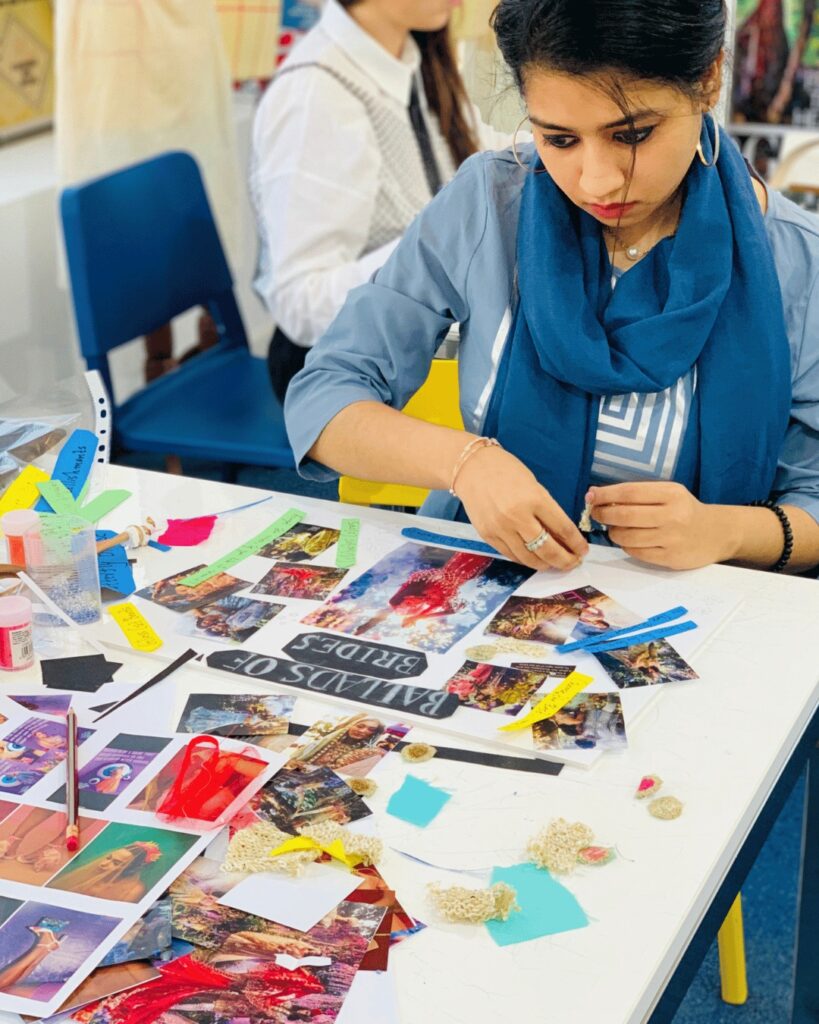
Assessment will be conducted through a range of coursework types. Across the modules of this program, the range of coursework assessments will generally include but are not limited to Essays, Case studies, Individual reflective learning logs, Portfolios, Group presentations, Critical reflections, group/teamwork, Posters, Mood Boards, Drawing sheets, Presentations, Project proposal, Project reports
Membership
Students can now apply for Student Memberships at the British Institute of Interior Design, UK at no cost.
Download
Download Brochure for Bachelor’s Degree in Interior Design